
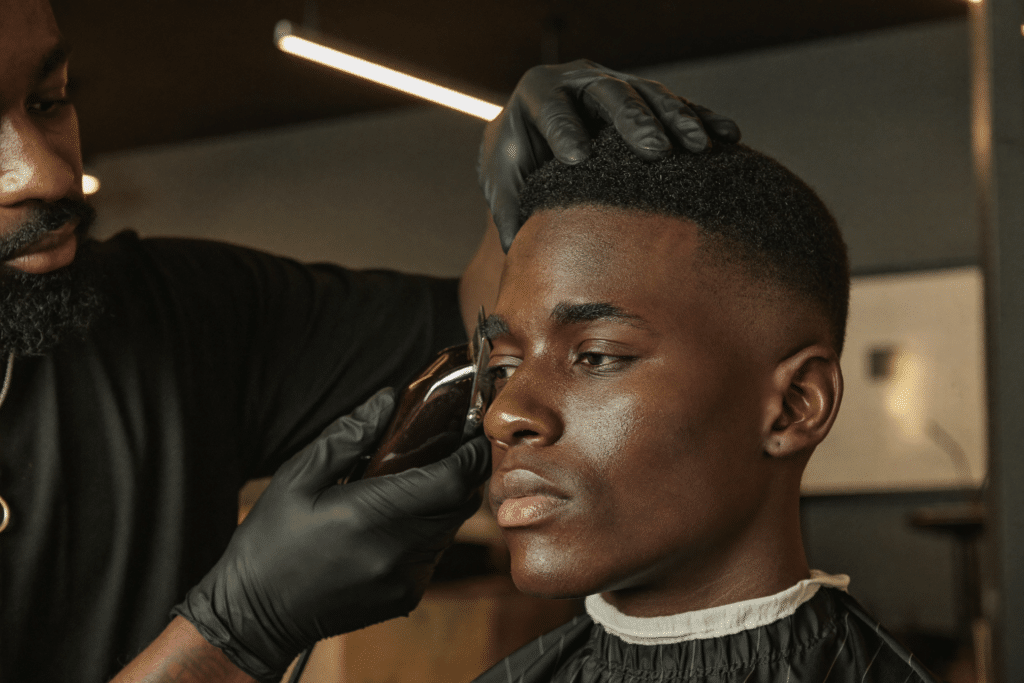
The barbering side of this industry has raised its own bar over the last decade, and it happened largely without institutional support. The techniques that define a high-level cut today were spread through the trade by barbers teaching barbers.
Precision is a consultation skill
The most common cause of a client leaving unhappy is not a technical error. It is a mismatch between what was asked for and what was understood. A strong consultation establishes three things before the clippers come out: the length at the shortest point, where the weight should sit, and how the client maintains it between visits.
That last question changes the cut. A client who returns every two weeks can carry a tight skin fade. A client who returns every six weeks will spend most of that time living with a shape that has grown out badly unless the cut is built to age well.
Skin health is part of the service
Barbers are working on skin as much as hair, and the standard for that has risen sharply. Ingrown hairs, razor bumps and irritation from folliculitis are common in textured hair and are frequently made worse by technique rather than by product.
Working with the grain on the first pass, keeping blades genuinely sanitised rather than merely sprayed, and adjusting pressure around the nape and jawline all reduce irritation measurably. So does telling a client honestly that a bald fade is not the right call for their skin that week.
The tools have moved
Cordless power, adjustable levers, finer taper combs and better lighting have all raised what is technically achievable at speed. None of that substitutes for blade alignment. A barber who checks and sets their blades daily produces more consistent work than one who relies on a newer machine.
Teaching the next room
The barbers setting the standard now are almost all teaching. Weekend classes, shop-floor mentorship and structured apprenticeships are pulling technique through the trade faster than any curriculum has. The clients feel it, and their expectations have moved accordingly.